The pot
What sumo wrestlers eat: chanko-nabe
The stew behind the sport: what goes into it, why wrestlers eat so much of it, who gets served first and why a sumo show builds its dinner around it.
Reserve your table by the ring ↗Quick answer
Chanko-nabe, also spelt chankonabe, is the stew that feeds sumo wrestlers while they build weight. No recipe is fixed: a dashi or chicken broth, protein such as chicken, tofu or fish balls, and vegetables. Wrestlers eat it in large quantities with rice, in rank order, in the stable. At a sumo show it is the meal that lets guests taste the sport's daily food.
What it is
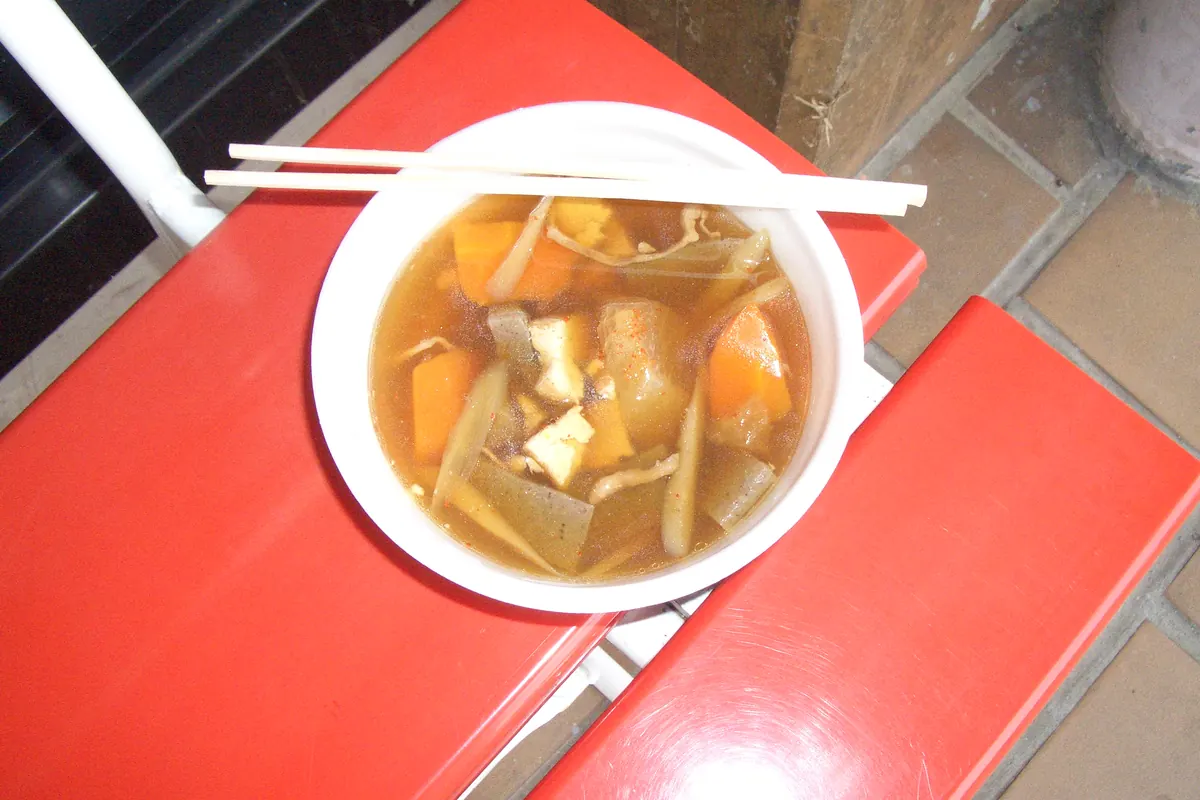
Wikipedia files chankonabe under nabemono, Japan's one-pot dishes, and says wrestlers eat it by the vast bowlful when they are trying to put on weight. Dashi or chicken broth forms the base, seasoned with sake or mirin. Since no recipe is fixed, the pot tends to hold whatever the cook has available.
What goes in
Most of the pot is protein: chicken, fish balls, tofu or sometimes beef. Vegetables such as daikon and bok choy fill it out. The article calls the dish very protein-rich and notes that wrestlers eat it with large amounts of rice, often five to ten bowls a meal, which is where the calories come from.
Why chicken at tournaments
At tournaments the stew is made with chicken alone, Wikipedia reports. The reason it gives is symbolic: a wrestler ought to stay on two feet, as a bird does, and never fall onto all fours. The article offers this as the thinking behind the habit, not as established fact, so read it as tradition.
How it is served
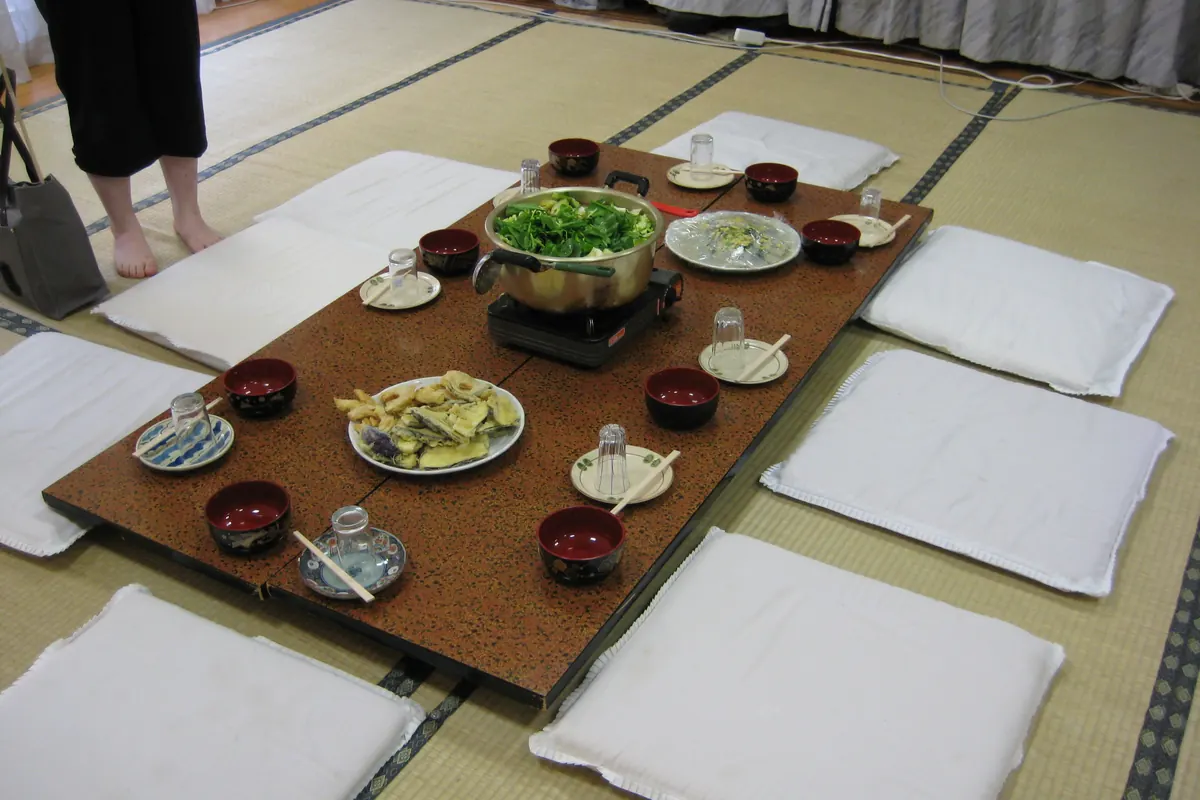
Inside a stable the pot goes round by seniority: the senior men and any visitors help themselves first, and the juniors take whatever remains. Cooking is a rotating duty, overseen by one of the more senior junior wrestlers, according to the stable article, and diners sit down in order of rank.
Rice, beer and bulk
Seldom does the stew arrive alone. Wikipedia says wrestlers pair it with heaps of rice, five to ten bowls a meal being common, and with beer, all to push up their calorie count. The same article observes that working wrestlers tend to carry little visceral fat, a fact researchers link partly to their training and to eating little sugar or processed food. The meal is built for volume, and for the effort that burns it off.
Where it fits the day
The stew comes after morning practice. Wikipedia says wrestlers are not normally allowed breakfast and are expected to nap after a large lunch, and that the pattern is meant to help them put on weight. Chankonabe is traditionally the first meal of the day, so it arrives when the training is done.
Read next: Life inside a sumo stable
After sumo
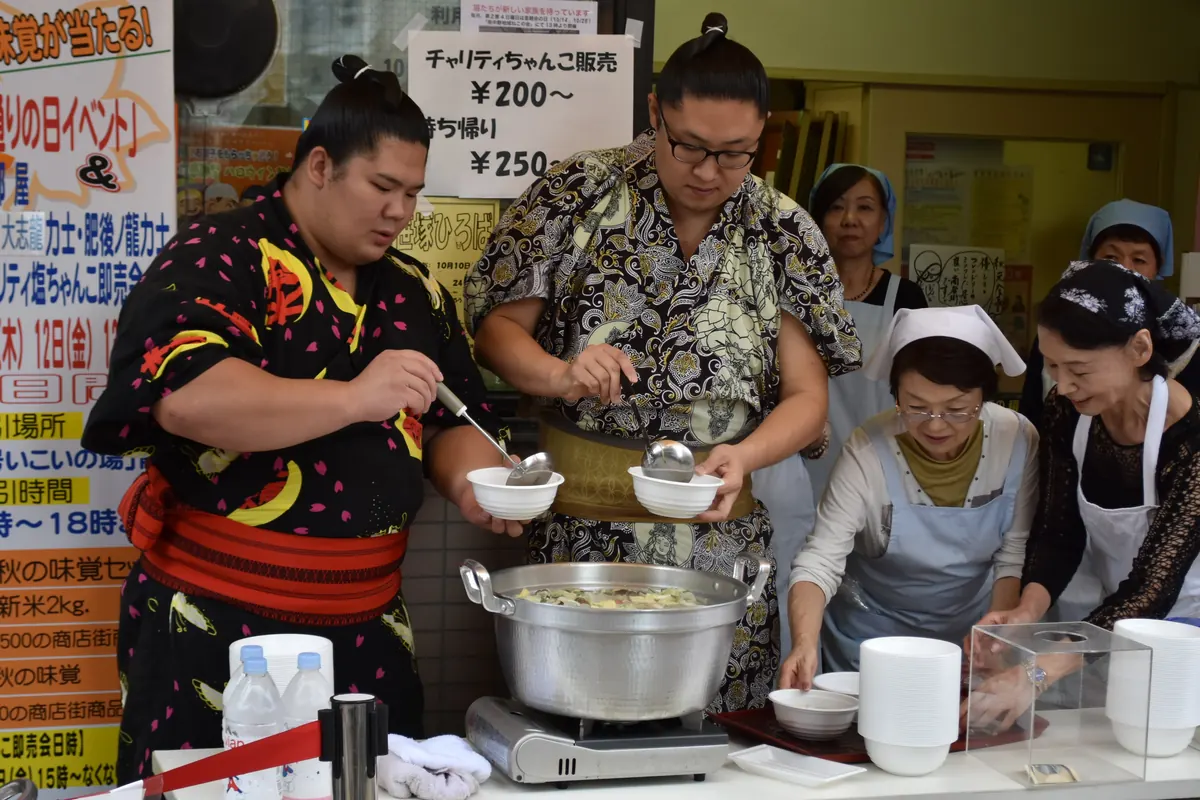
Retired wrestlers often run restaurants that specialise in the dish. Wikipedia says the first of these, Kawasaki Chanko, opened in 1937 in Ryōgoku, the Tokyo district where many stables stand. The rikishi article says most retirees who leave the association find work in chankonabe restaurants.
At a sumo show
A meal of chanko-nabe at a show like the Asakusa one is a taste of the stable's table, not a stable meal. The listing promises an all-you-can-eat meal built around it, with one drink included, and asks for two days' notice for vegetarian and vegan meals. For the evening itself, read the guide on whether the show is worth it.
Sources